In grad school, Mandar Ambulkar cranked up the pressure — and thrived
March 13, 2026
As the Class of 2025 lined up to receive their diplomas, Mandar Ambulkar (MS in Computer Science ’26) watched a monitor, waiting for his cue. He was the only student on the audiovisual and information technology (AV / IT) team for the ceremony. His job was to display each graduate’s name on a large screen at the precise moment they stepped onto the stage.
More than 800 people filled the auditorium; another thousand watched online. “If I messed up once, it would disrupt the entire event,” he said. He gave the task his full careful attention, coordinating the system as students rushed or strolled across the stage.
Graduation was one of several responsibilities he juggled that semester. It followed on a year and a half of steadily taking on more projects and duties. “I’m trying to figure out how many things I can do.”
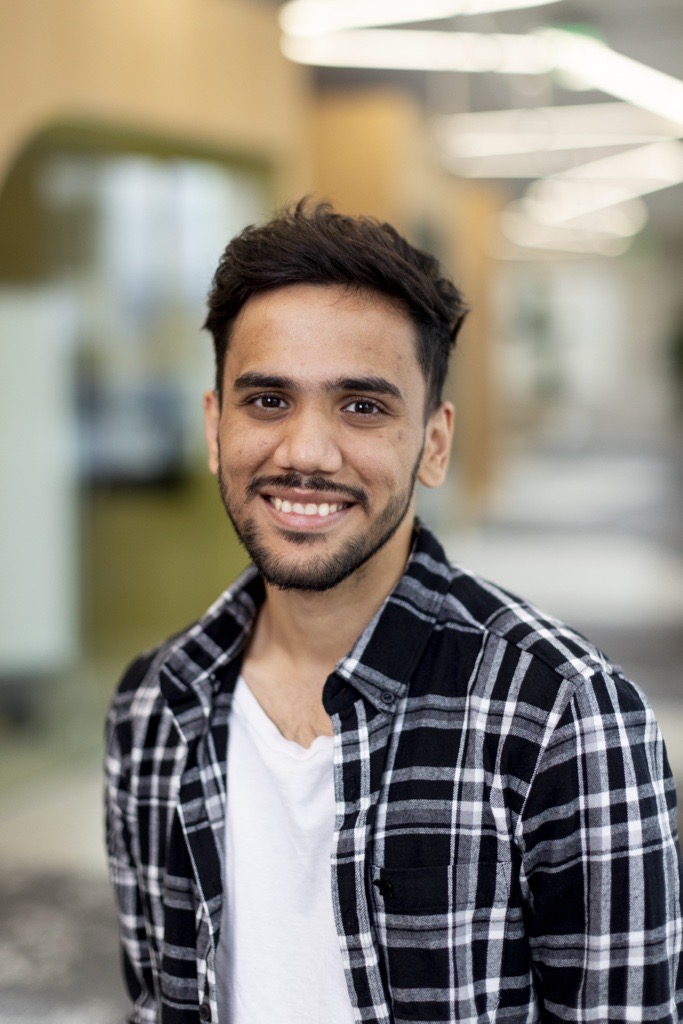
Photo of Mandar Ambulkar by Ruby Wallau
A move to California and a fresh start
When Mandar first arrived in Silicon Valley from Pune, he spent his free time at the gym or with friends. By summer, he had discovered opportunities on campus — student interest groups, part-time jobs — and found himself eager to do more.
He applied for both a teaching assistant (TA) position and an AV and IT support role. To his surprise, he got both. “In no world could I have picked between one or the other,” he said.
Both roles required training, and the overlap was stressful at first. To stay on top of everything, he relied on a pen and legal pad. He broke big projects into small tasks he could complete in under two hours, and avoided multitasking. He was beginning to discover his own ability to get in the zone while juggling priorities. “I focused on the one thing I had my hands on and nothing else.”
Hands on experience with emerging technology
Already working two campus jobs, Mandar also decided to explore opportunities to collaborate with his peers on research. His first project, with classmates Harshal Jorwekar and Cen Chang, a real-time hand gesture recognition system.
The gesture-recognition project grew out of a group assignment for a course in pattern recognition and computer vision — work that the students took far beyond the requirements. “We wanted to do something new, and multimodality was coming into the picture in a lot of deep learning algorithms,” he said. “We wanted to see if it could be applied to hand gesture recognition, which is an established problem.”
After months of work, the team arrived at a system that proved more accurate than traditional approaches and efficient enough to run on personal devices. Their project earned third place at the Winter 2024 Student Research Showcase and drew interest from industry professionals, who suggested applications they had not previously considered, including simulation tools for medical training in rural or low-income areas.
The following year, Mandar collaborated with classmates Sampada Kulkarni and Yulong Cao, and with startup SurfSense, founded by Alan Eng, director of strategic partnerships, on an AI chatbot. Building on earlier student work, the team focused on data privacy and encryption. The system, now undergoing compliance reviews, could serve as a beta test for Northeastern and potentially other universities if approved.
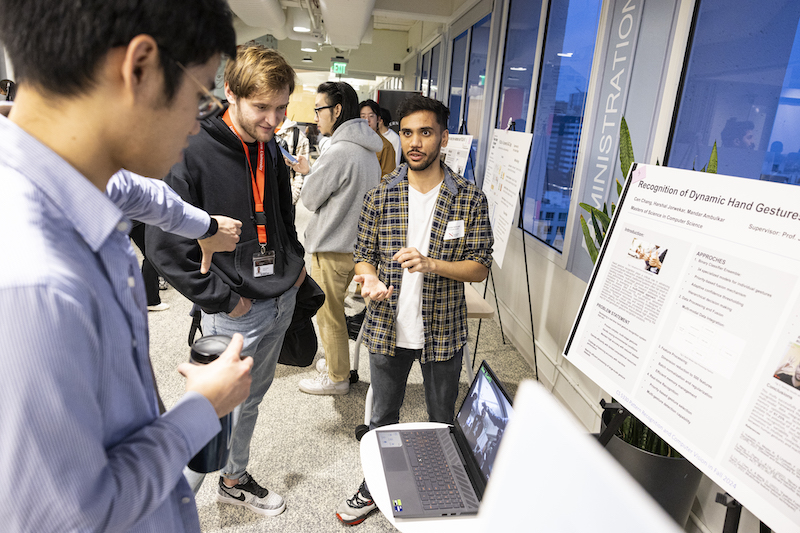
Discussing his research in computer vision and gesture recognition with other graduate students. Photo by Scott Chernis.
Beyond the classroom, a new strategy for success
Through research, teaching, and campus work, Mandar expanded his education. Research introduced him to ideas not covered in his coursework. Serving as a TA gave him tutoring experience and the chance to work with one of his favorite professors. Working on the AV and IT team placed him at every campus event and brought him into regular contact with faculty and staff, deepening his connection to the university.
Together, those experiences built his confidence. “Nothing is impossible to master if you’re in the right environment with the right people,” he said. “I was lucky to work with supportive teams, especially early on. They gave me the time and space to grow into my roles.”
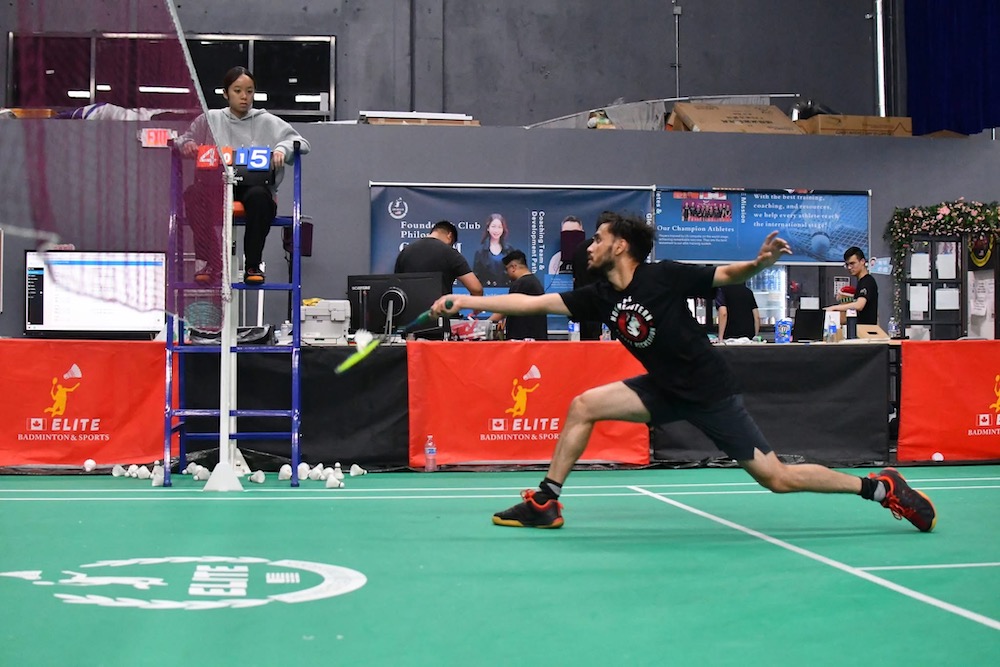
As a student in India, he felt that he should focus exclusively on his studies. “The most I did was play badminton on the side,” he said.
At Northeastern, he continued playing the sport and even competing in tournaments alongside other commitments.
Taking on more helped him better understand how he works best. “I think I thrive in fast-paced environments,” he said. “I like when there’s something new to do — changing things up keeps me on my toes.”
With his own graduation approaching in May, he will soon be on stage while someone else makes sure the names roll across the screen and the captions appear without delay. He hopes to find work that keeps him just as challenged and engaged as the broad range of responsibilities he cultivated as a student. “I just want to become a better and better version of myself,” he said.
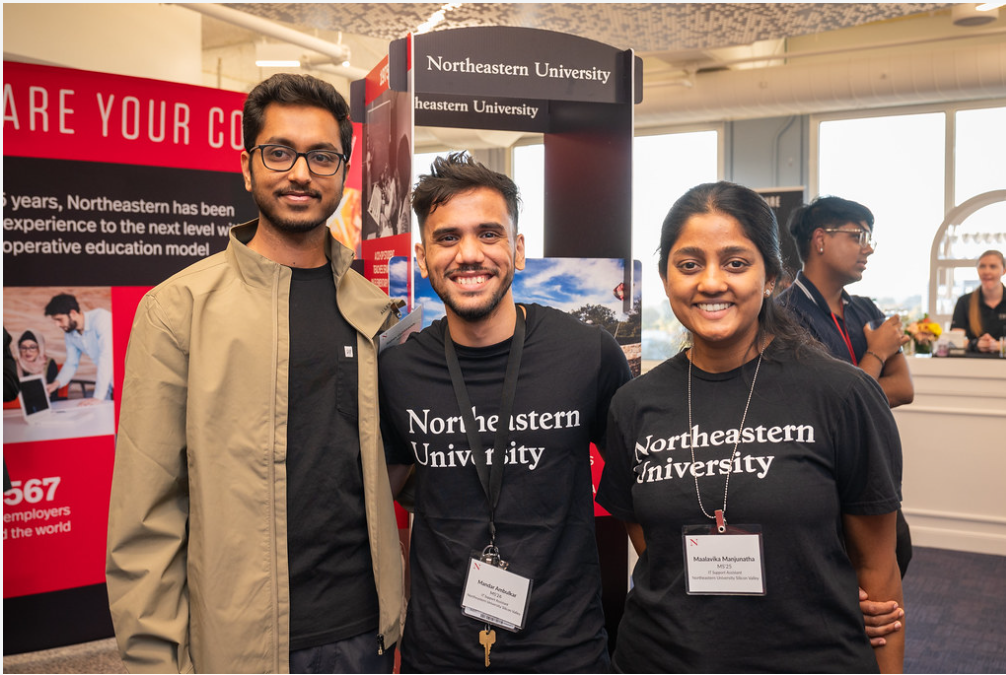
At work with other student employees