Envisioning an Inclusive Future: Student Voices on AI & the Workforce
November 5, 2025
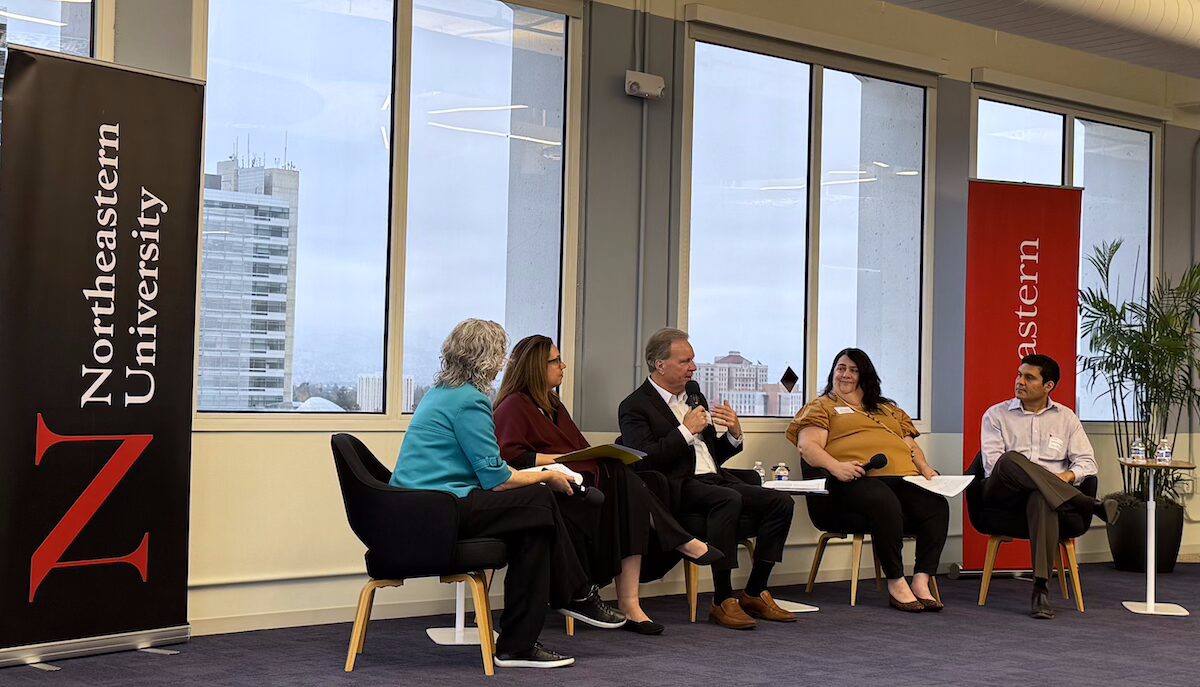
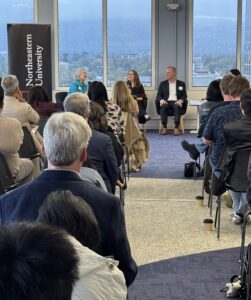
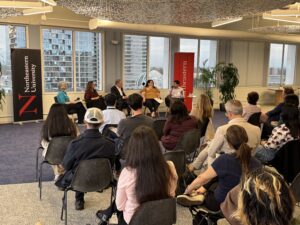
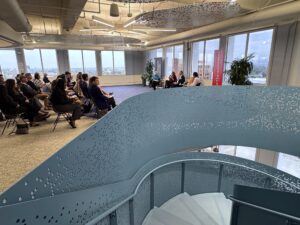
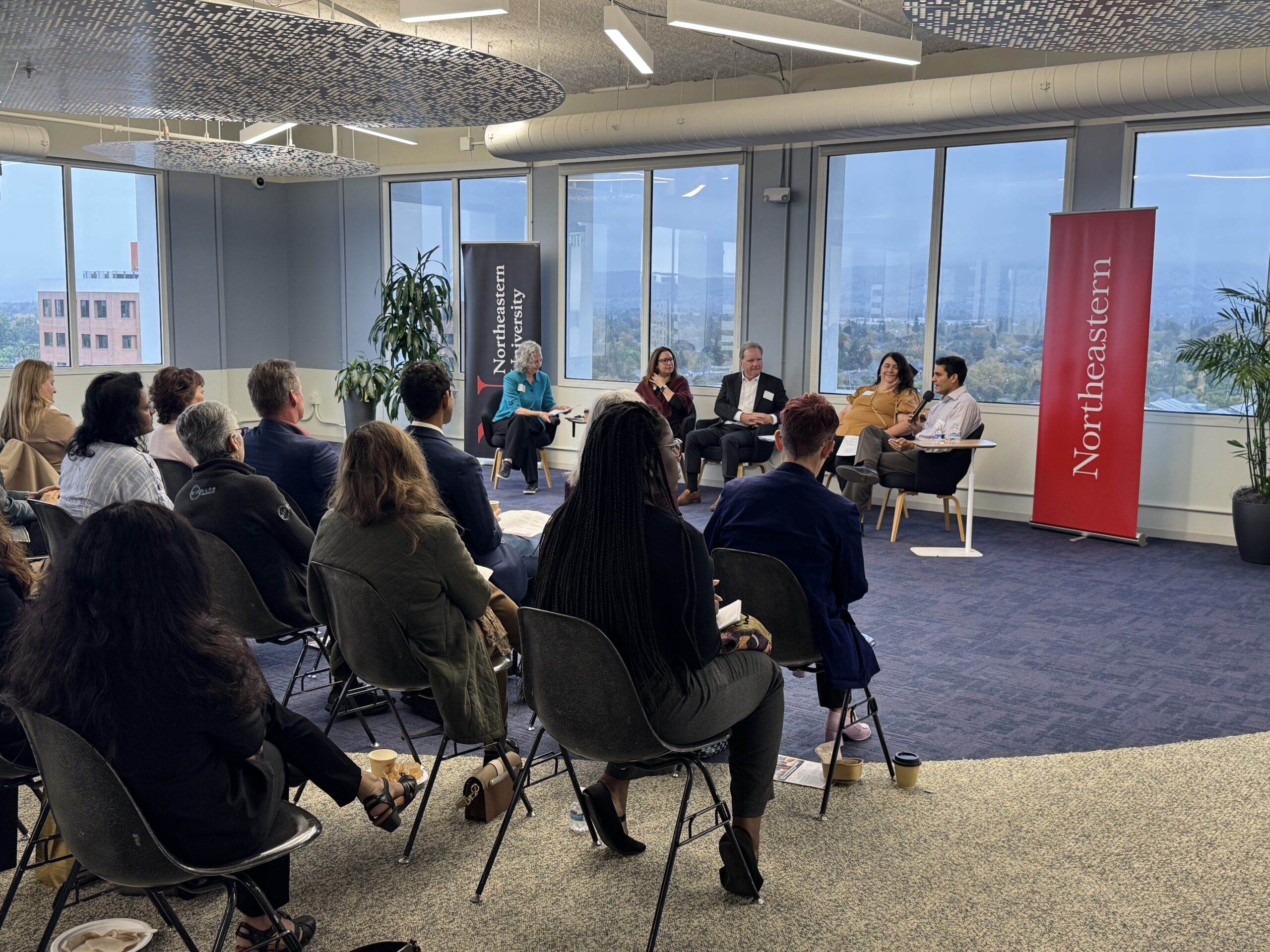
When California State Senator Dave Cortese joined industry leaders and educators at Northeastern University’s Silicon Valley campus on October 23rd to discuss AI’s impact on the workforce, the conversation didn’t end when the breakfast plates were cleared. For students in attendance, the panel sparked deeper reflection about their own futures and the pathways being carved, or that still need building, in this transformative era.
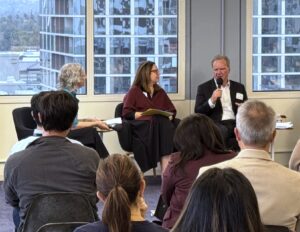
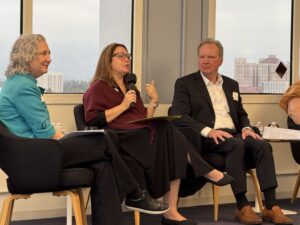
The event, moderated by Regional Dean Caroline Simard and featuring Dean Mehrdad Aliasgari of SJSU’s College of Information, Data and Society; Dawn Carter, Strategic Global Talent Acquisition Leader; and Mary Murphy, CEO of Equity Accelerator and the author of the book Cultures of Growth, tackled urgent questions about adaptation, responsibility, and opportunity. But perhaps most valuable were the insights students took away: not just about AI itself, but about what true inclusion means as entire industries reshape themselves.
Beyond Tool Proficiency: Building Foundational Thinking
For Zichen Tian, a career-switching Computer Science student, the panel crystallized a crucial distinction. “To truly leverage AI and become its master rather than being mastered by it, we need stronger foundations in design thinking and computational thinking,” Tian reflected. The observation cuts to the heart of a common misconception: that AI literacy simply means knowing which tools to use.
Tian argues instead for a more fundamental approach. “It’s not enough to just use AI as a tool. We need to understand the principles behind it, think critically about problem-solving approaches, and be intentional about how we apply these technologies.” This perspective is particularly relevant for career-switchers entering tech fields, but Tian sees it as essential for all students. The implication for educational institutions is clear: curriculum must go deeper than software training to cultivate the critical thinking skills that will remain valuable even as specific technologies evolve.
From Classroom Theory to Community Impact
Vineeth Sakhamuru echoed the call for depth, but with an emphasis on applied learning. “Students need more direct access to real-world, high-impact projects where they can actually apply AI skills to solve messy, meaningful problems,” Sakhamuru noted, suggesting partnerships between universities, public agencies, and local businesses.
The examples Sakhamuru proposed (designing AI systems for smarter city infrastructure or improving workforce analytics with real data partners) point toward an inclusive model where students don’t just prepare for the workforce in isolation, but actively contribute to addressing community challenges. “Opportunities like this would not only help students build technical fluency, but also professional credibility and a sense of social impact, which I believe is what really motivates people to keep learning and contributing.”
This sentiment aligns with the panel’s emphasis on skills-based hiring, a trend that Sakhamuru sees as particularly relevant to inclusion. “Making sure students from all backgrounds get to work on impactful projects and have great guidance as they navigate these new career paths” becomes the practical definition of equity in the AI era: not just equal access to education, but equal opportunity to demonstrate competence through meaningful work.
Representation and Micro-Cultures Matter
For international students like Yujing Wang, the conversation about inclusion took on additional layers. Wang found it “encouraging to see institutions and policymakers working together to ensure these opportunities reach everyone,” particularly given Northeastern’s diverse student body. The recognition matters: as AI reshapes hiring practices and career pathways, students from varied backgrounds need assurance that the new systems being built won’t replicate old barriers.
Changxu Wei highlighted another dimension of inclusive environments, recalling Dr. Mary Murphy’s discussion of micro-cultures. “Being assertive, smart, and collaborative when we voice our perspectives can help shape healthier communities, even in small pockets,” Wei noted. This insight extends beyond workforce preparation to the immediate campus experience—a reminder that creating inclusive AI-era pathways begins with fostering environments where diverse voices feel empowered to contribute.
Wei also appreciated Senator Cortese’s willingness to discuss community concerns like homelessness in the city, and Dean Simard’s openness to student ideas about strengthening campus visibility. These interactions model the continuous engagement the panel emphasized, demonstrating that responsiveness and accessibility from leadership are themselves forms of inclusion.
Building the Future Together
Across student reflections, one theme resonated powerfully: the need for ongoing education and adaptation. Aisha captured this sentiment, noting that “learning never stops, and that all of us (students, educators, and policymakers) have to keep adapting as technology evolves.”
This isn’t passive adaptation but active participation. Students aren’t viewing themselves merely as recipients of workforce changes but as stakeholders who can shape outcomes. Whether through demanding stronger foundational education, seeking meaningful project experiences, advocating for policy awareness, or creating supportive campus cultures, they’re claiming agency in an uncertain transition.
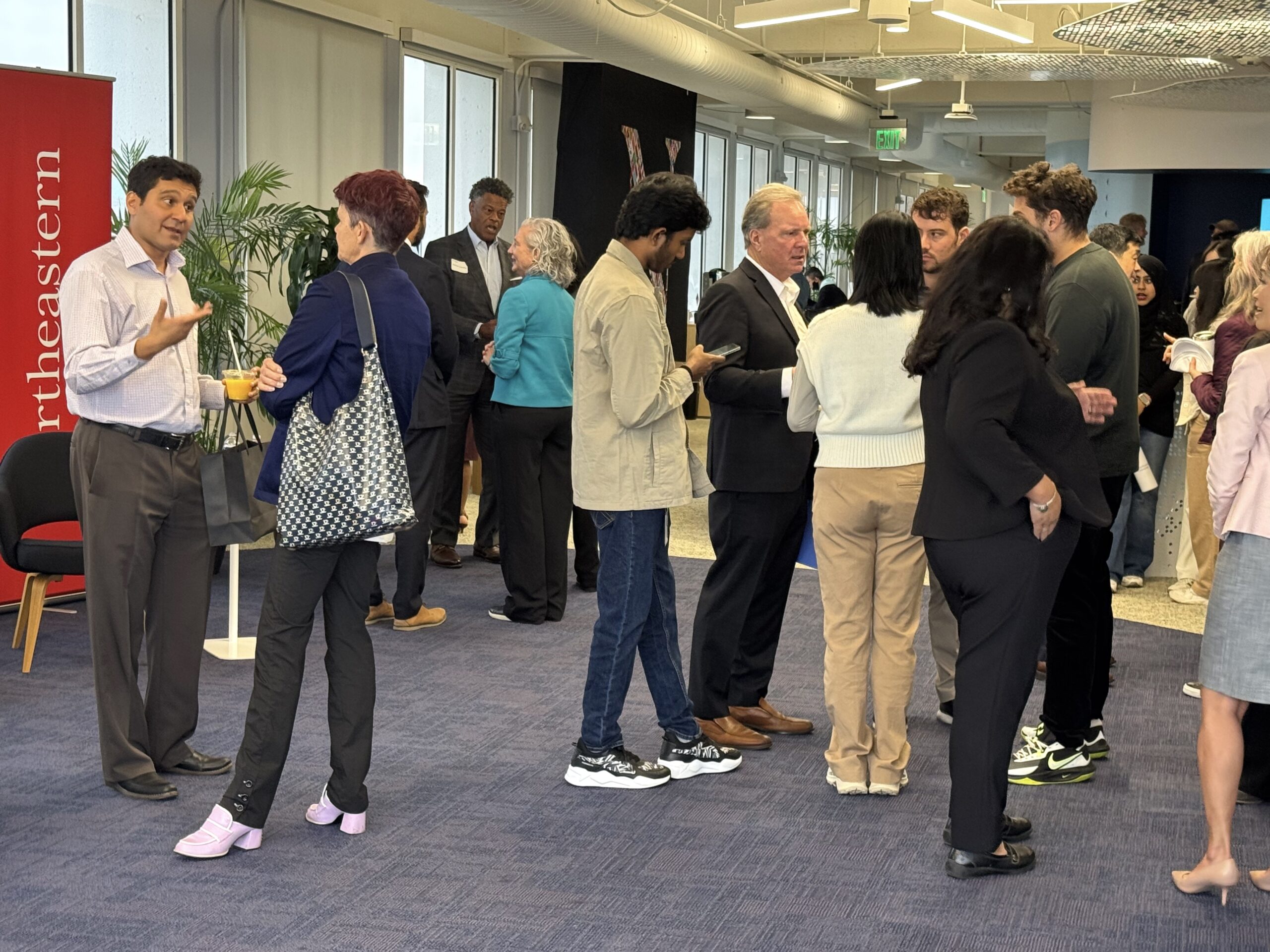
The energy in the room that October morning, and the thoughtful reflections that followed, reveal something powerful: when given the opportunity to engage with leaders addressing real challenges, Northeastern students respond with vision, pragmatism, and commitment to equity. Events like this don’t just inform students about change; they invite us to be architects of it.
As Wei put it, walking away from the event: “I feel grateful, energized, and hopeful. Here’s to building more spaces where students, leaders, and institutions grow together, and to creating a campus and community where everyone can thrive in this fast-paced era.”
That collaborative spirit — bringing together policymakers, industry leaders, educators, and students in honest dialogue- is exactly what will make the AI revolution truly inclusive. And if this panel is any indication, our community is not just ready for that challenge, but already leading the way.