Cracking the interview code: students prepare at three-day bootcamp
March 3, 2026
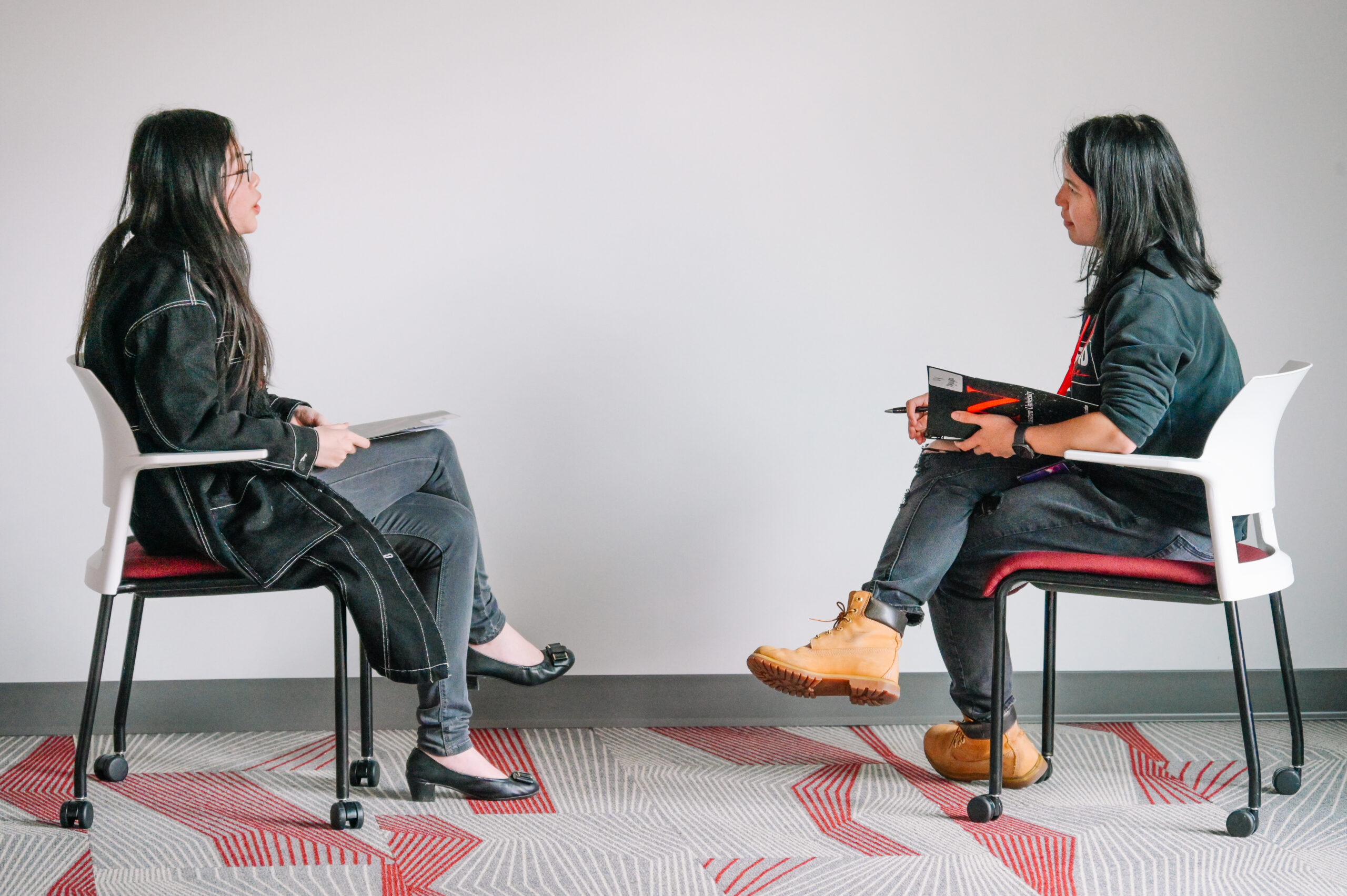
For many international students, the U.S. job interview can feel like a performance in an unfamiliar language—not just linguistically, but culturally. The unspoken rules of small talk, the expectation to sell yourself with confidence, the pressure to distill years of experience into a ninety-second story: these are skills that don’t come from textbooks. They come from practice.
That was the premise behind the Interview Skills Bootcamp, a three-day intensive held this semester at Northeastern University’s Silicon Valley campus. Developed and led by the Career Development and Experiential Learning department, the series was designed to take students from anxious to prepared. It covered everything from storytelling frameworks and elevator pitches to technical problem-solving and mock interview practice.
Day 1: The Power of a Good Story
The bootcamp opened on a Tuesday morning with a deceptively simple exercise: brainstorm as many uses for a paperclip as you can in sixty seconds. The activity, playfully titled “Paperclip Possibilities,” wasn’t about paperclips at all. It was about unlocking creative thinking under pressure, a skill that shows up in every interview but is rarely practiced deliberately.
From there, the session moved into the heart of Day 1: mastering storytelling for interview success. The facilitators emphasized that stories create emotional connections that make candidates memorable far beyond what’s written on a resume. Unlike a dry list of accomplishments, a well-told story engages the listener, builds trust, and transforms a formal interview into a meaningful conversation.
Students learned the anatomy of a strong interview story, built around three core elements: setting the scene with clear context, describing the specific actions taken, and articulating a measurable outcome. The session then introduced the STAR method (Situation, Task, Action, Result) as a structured framework for organizing these stories, particularly for behavioral interview questions. Participants practiced crafting their own STAR responses to prompts like “Tell me about a time you had to work under pressure,” with sample answers modeled to show how the method works in practice.
The day also covered the distinction between behavioral and situational interviews. While behavioral questions ask candidates to draw on past experiences, situational questions present hypothetical scenarios and test how someone would respond. Both formats, the facilitators noted, reward the same underlying skill: the ability to think clearly and communicate structured, thoughtful answers.
Day 2: First Impressions and the Art of Conversation
Wednesday’s session shifted from storytelling to the moments that bookend it: the introduction and the small talk.
Students worked on crafting elevator pitches, concise thirty to sixty second introductions that weave together their background, core skills, and career aspirations. The session broke down the anatomy of a strong self-introduction into seven components, from stating your name with confidence to articulating what unique value you bring to the role. For career changers in particular, the facilitators offered guidance on framing a non-linear professional journey as a strength rather than a gap, emphasizing transferable skills and the intentionality behind the pivot.
The bootcamp then turned to a topic that many international students find surprisingly challenging: small talk. While it may seem trivial, small talk serves a real purpose in professional culture in the U.S.. It keeps interactions relaxed, demonstrates genuine curiosity about others, and creates openings for deeper connection. The session walked students through safe conversation topics such as travel, food, local events, and shared experiences at the venue, while also flagging workplace taboos to avoid, including politics, salary, personal health questions, and negative comments about previous employers.
Students also practiced reading non-verbal cues during conversations: recognizing when an interviewer is engaged and leaning in versus when it’s time to wrap up a story and move on. The day concluded with paired mock interview sessions, giving participants the chance to put their STAR stories and elevator pitches into action with real-time peer feedback.
Day 3: Tackling the Technical Round
Thursday’s final session addressed the interview format that often generates the most anxiety: the technical round. Students explored strategies for approaching technical questions and problem-solving exercises methodically, learning to break complex problems into manageable steps, think aloud to demonstrate their reasoning process, and stay composed when they don’t immediately know the answer. The session included LeetCode practice to help students build familiarity with the types of coding and logic challenges commonly encountered in technical interviews.
Walking Out Ready
Across three mornings, the bootcamp gave students something more valuable than a checklist of interview tips. It gave them a vocabulary for talking about themselves with clarity and confidence, a set of frameworks for structuring their answers, and, perhaps most importantly, the experience of practicing in a low-stakes environment before the real thing.
For international students navigating a job market that rewards self-promotion as much as substance, that preparation is invaluable. And the good news? The support doesn’t stop here. Keep the momentum going with more resources from Northeastern:
One-on-One Career Coaching
The advisors in the Silicon Valley campus career department are available for direct coaching appointments with students and alumni.
Big Interview
A self-paced training tool available for free to Northeastern students. You’ll train with video lessons and then practice with interview questions. AI feedback can help you improve (and so can simple practice — don’t underestimate the value of trying your answers out loud!).
Northeastern Career Design Online Resources and Silicon Valley Campus Career Resources
Explore the campus career Sharepoint site and the university-wide career site for interview guides, knowledge articles, upcoming events, career pathways, and many other tools for your job or co-op search.
Forage
A “job simulation” tool that is free for students. Major companies create online companies that range from one to six hours and let you try out tasks that an intern or entry-level employee would be assigned. Some examples include a Software Engineering module from JPMorgan Chase & Co, and an Explore Engineering module from GE Aerospace.
Girls Who Code
Get in touch with our student-led campus chapter for meetups, interview practice, and new connections.