Campus iftar event celebrates the meaning of Ramadan across cultures
March 20, 2026
Photos by Ruby Wallau for Northeastern University
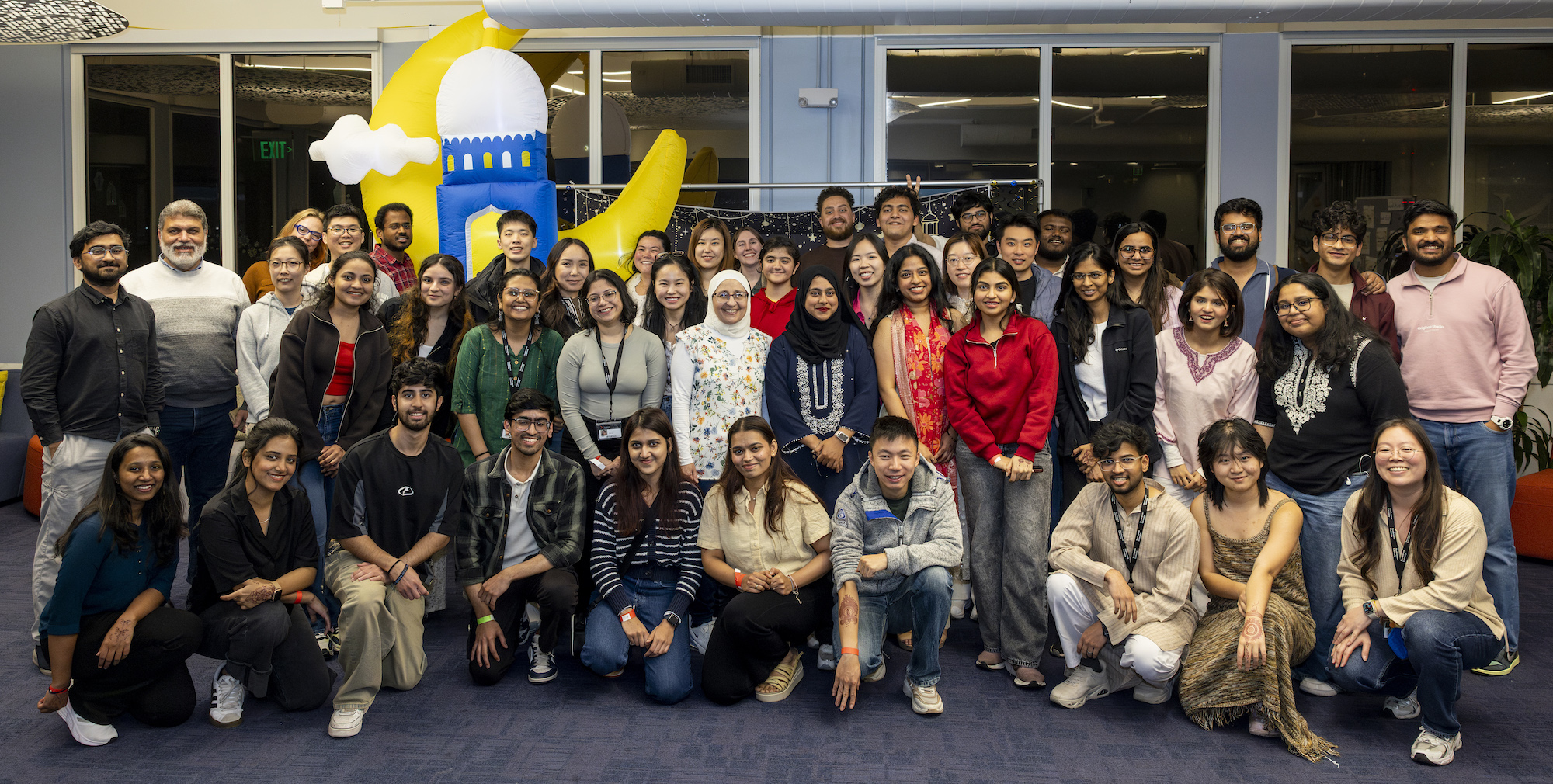
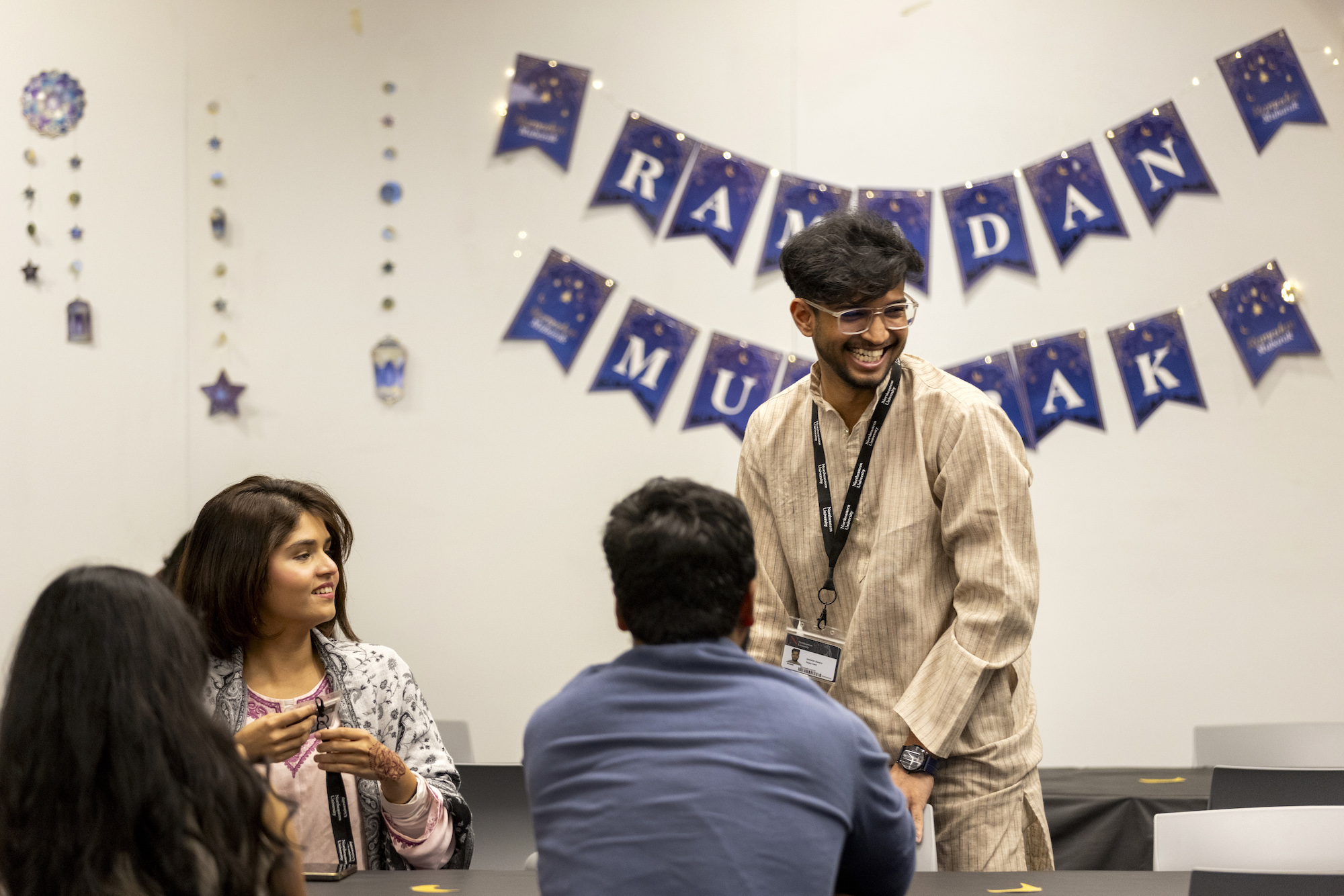
Annually, Silicon Valley campus gathers for an iftar meal during the month of Ramadan. The tradition was begun by Associate Teaching Professor Lama Hamandi, who teaches for Khoury College of Computer Sciences and has been a member of the campus faculty since 2021. She created it to connect Muslim students to one another, and also to share the tradition with the diverse student population of the campus.
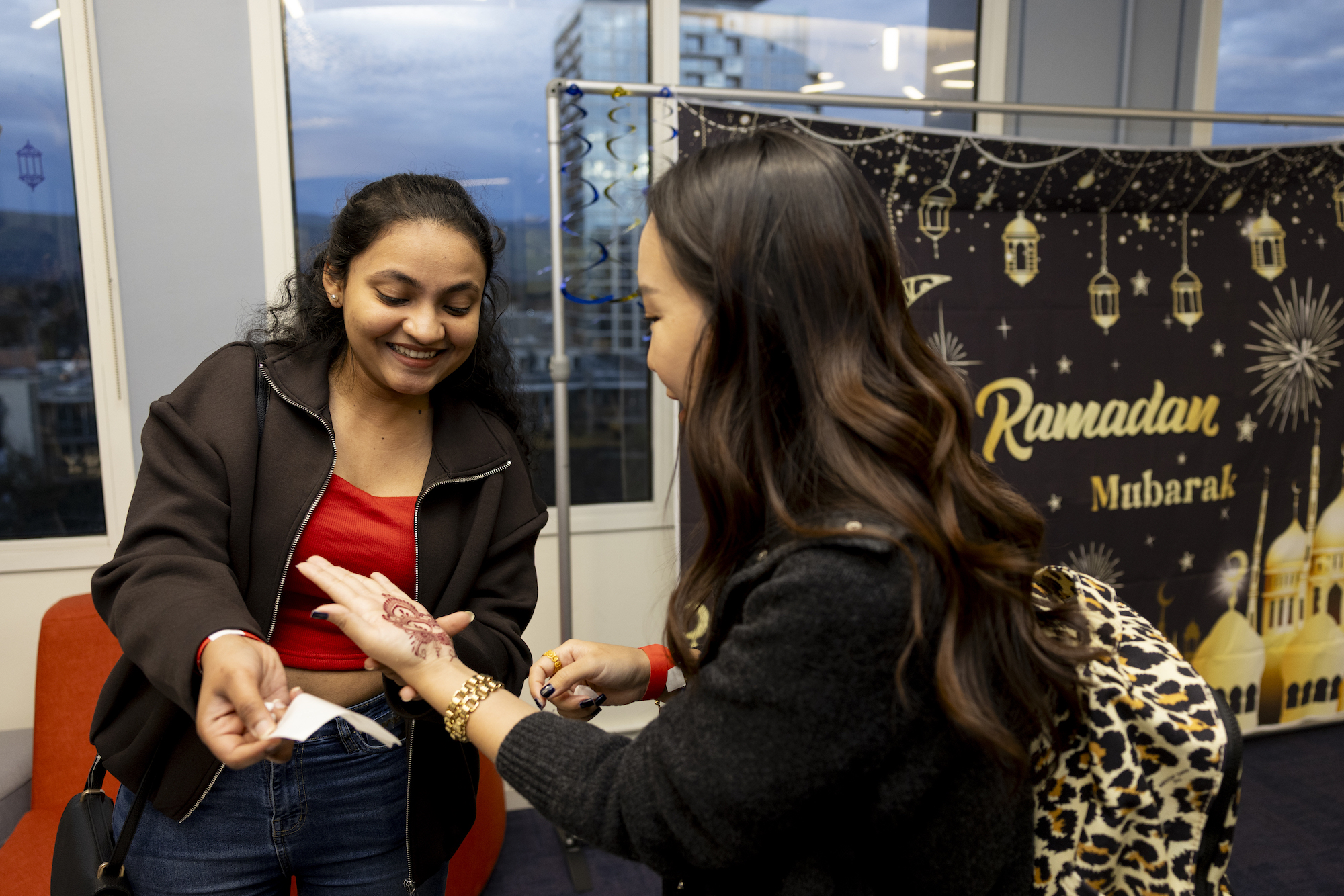
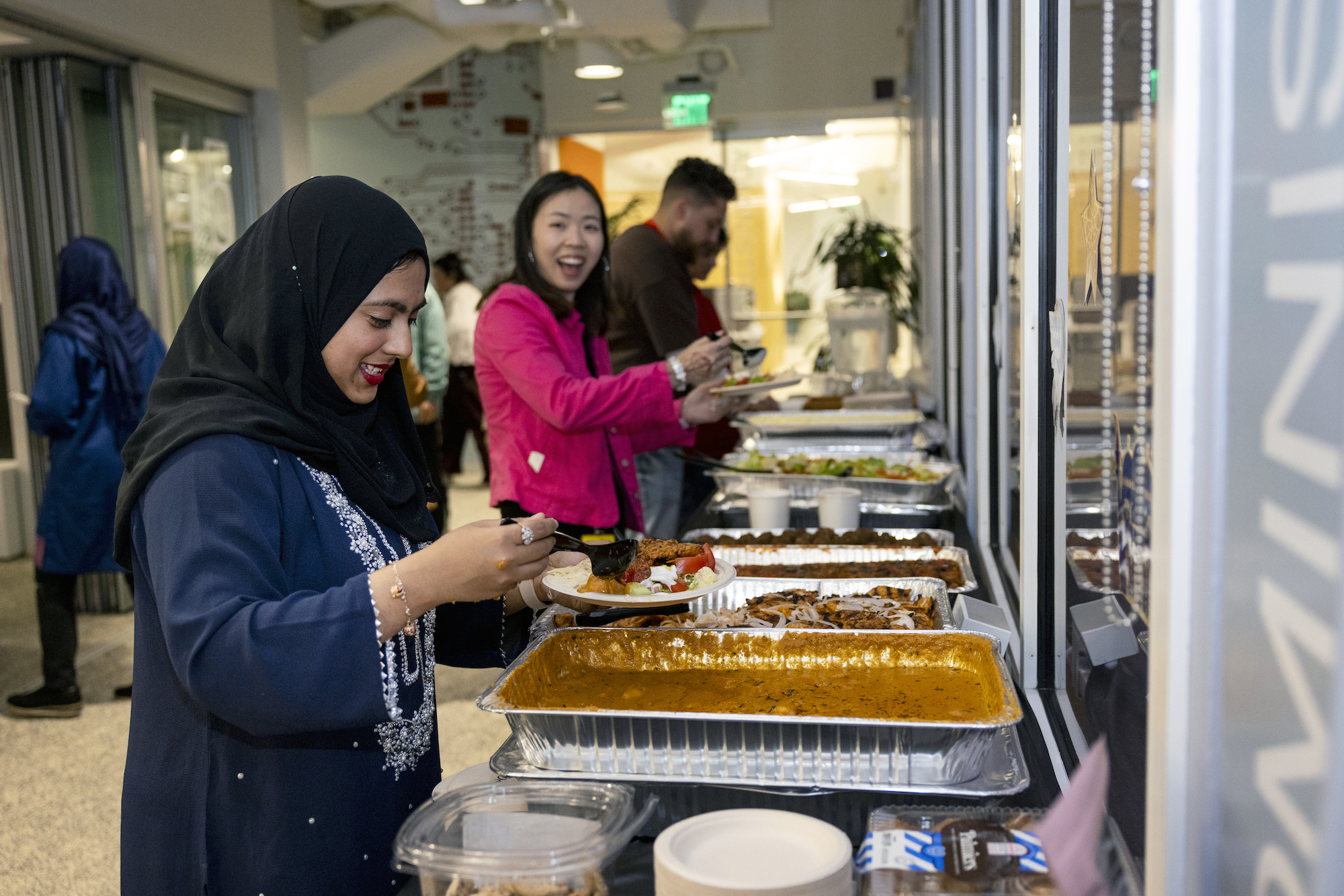
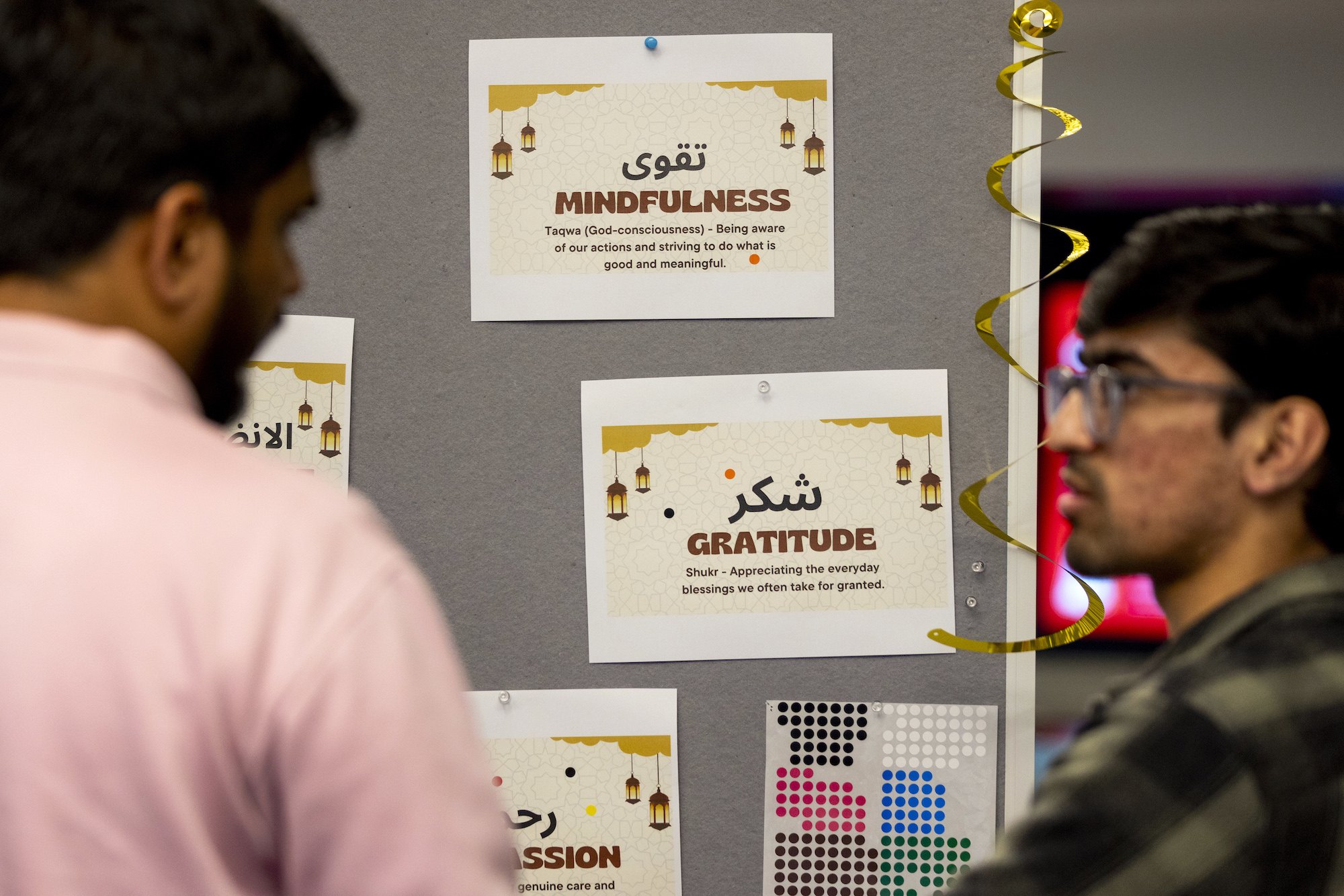
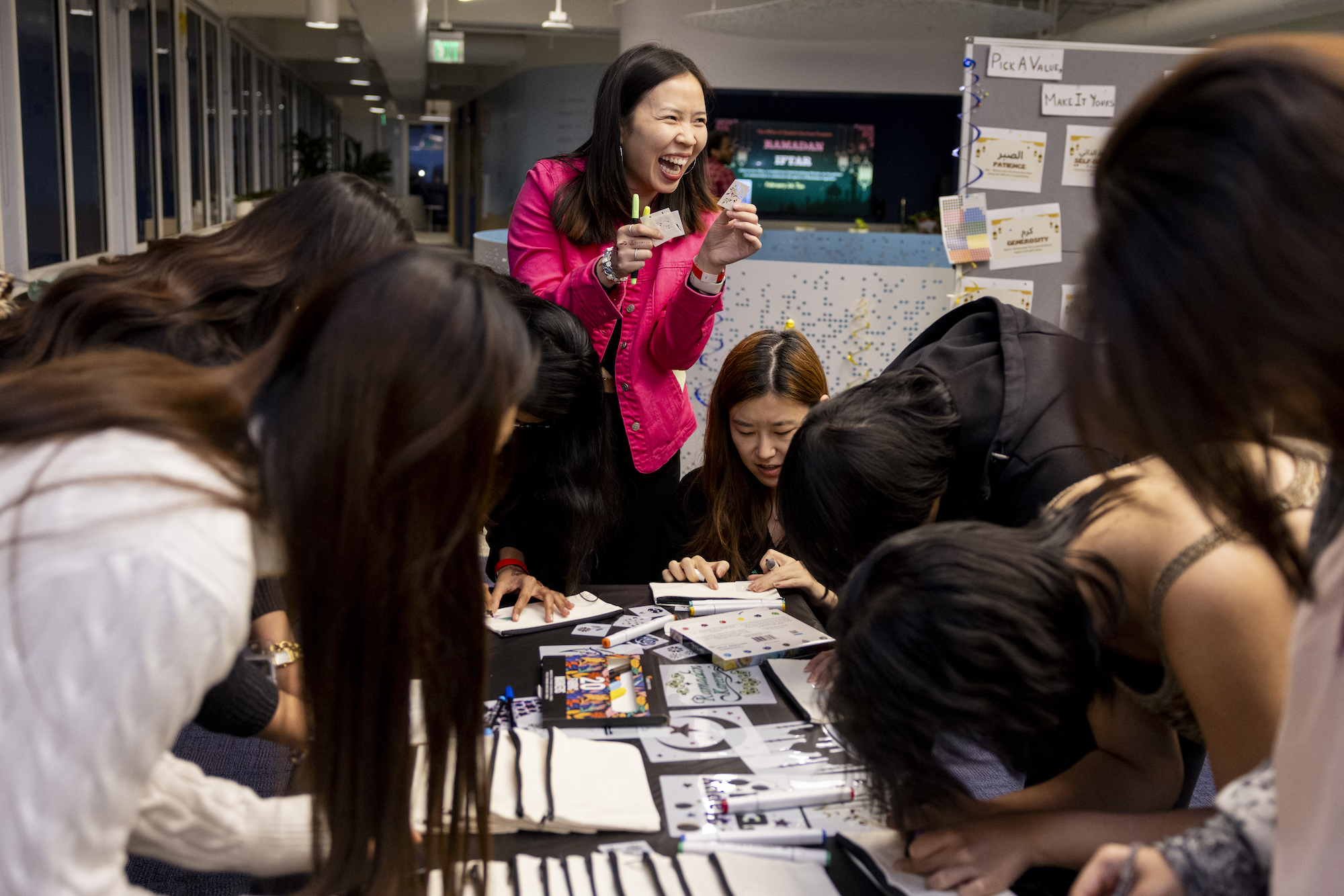
The event grows each time, this year filling a large section of the 10th floor with students, faculty, staff, and their invited friends and families. As with other campus events like Lunary New Year, Diwali, and Friendsgiving, attendees from around the world came ready to learn more about each other. Activity and craft stations kept the room lively as the group waited for the sun to set.



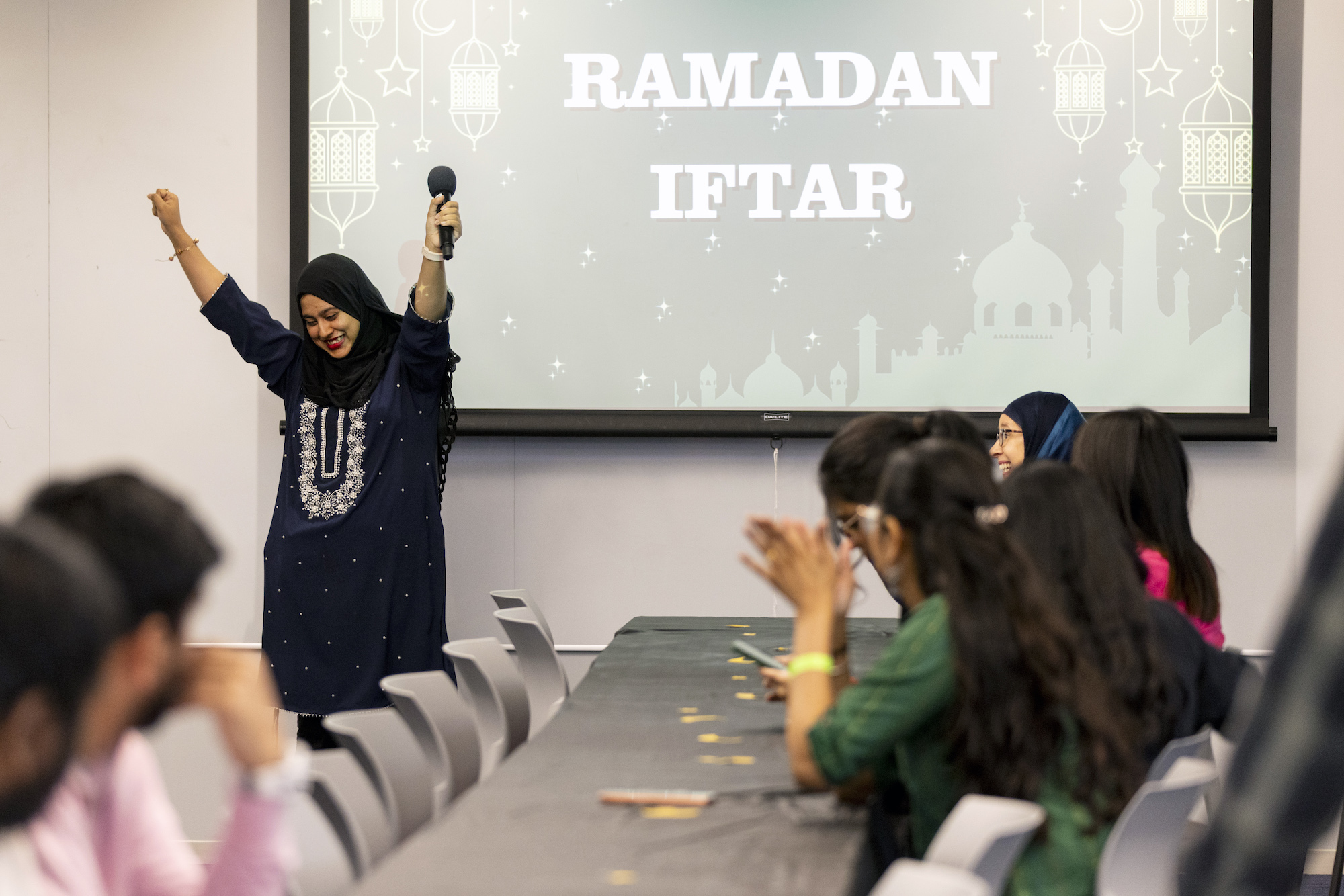
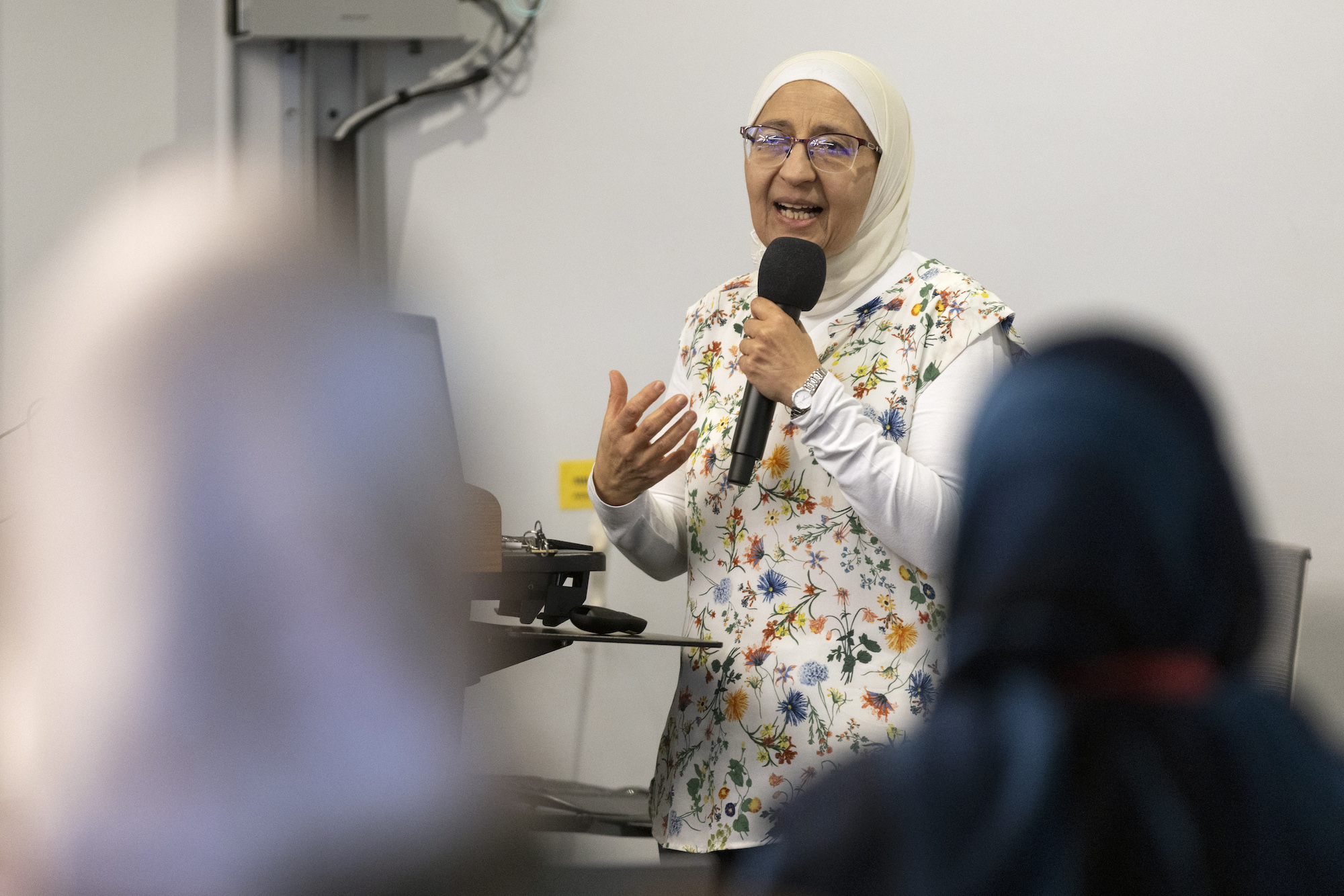
Just before dinner, Dr. Hamandi gave a short presentation about Ramadan and its importance in Islam. During the ninth month of the Islamic lunar calendar, observers fast from sunrise to sunset and participate in special prayers to commemorate the revelation of the Quran. While the physical act of fasting is the most obvious to those outside the faith, Dr. Hamandi expanded on the spiritual tenets of the practice.
“The point of fasting is to develop righteousness. We need to stay away from all of these bad habits: lies, force, backbiting, etc.,” she explained. “If I’m fasting but I’m screaming and getting angry, or backbiting people, I don’t think my fasting is helping.”
And just as fasting alone without mindfulness is not enough to be observant, it is also possible to practice Ramadan without abstaining from food and drink. Donating to charity, preparing food for others, and helping the less fortunate are ways that those whose health or circumstances do not permit fasting can demonstrate their faith.
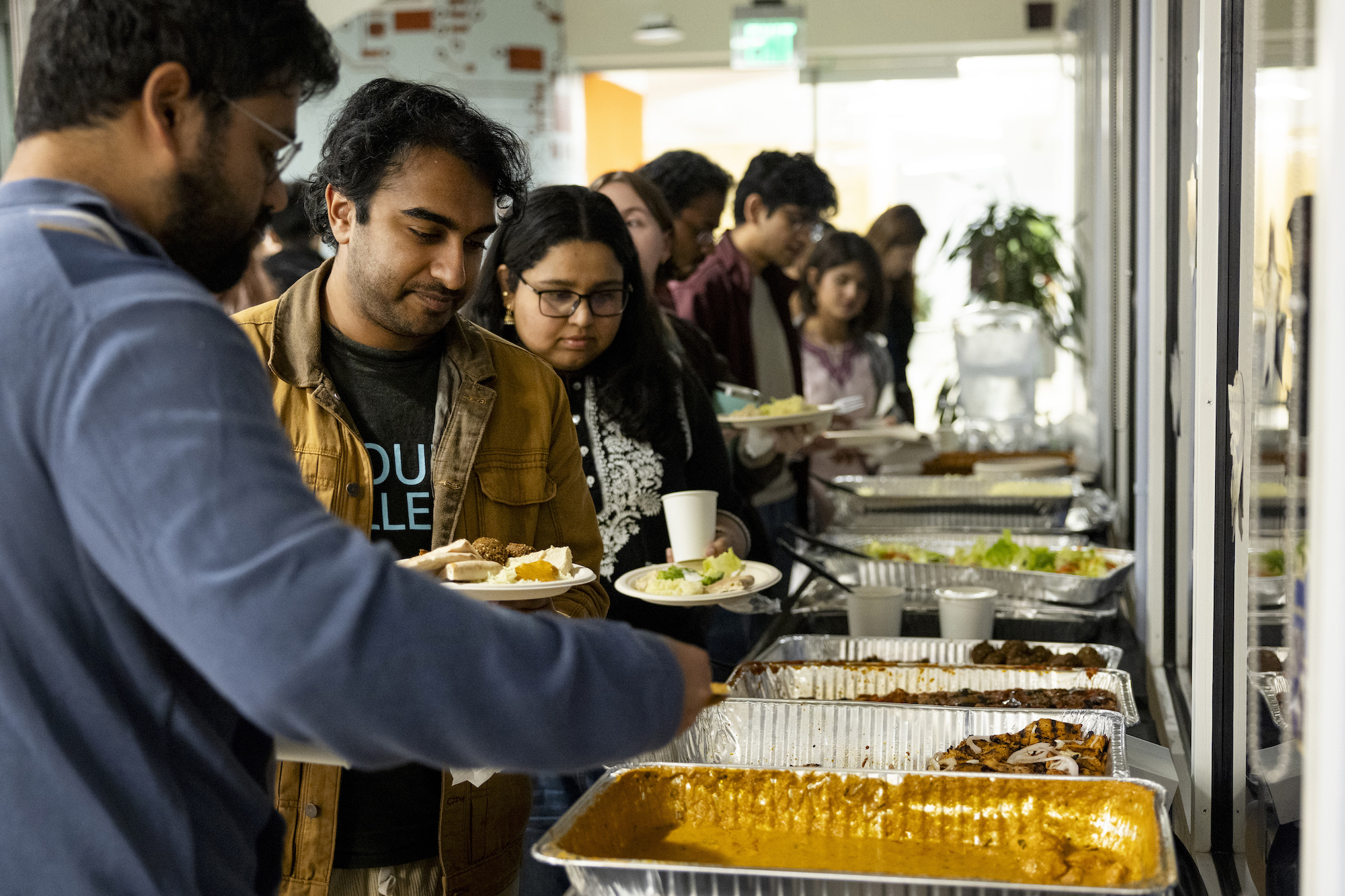
The event attendees who were observing were first to be served, breaking fast with dates as is traditional before the rest of the food.

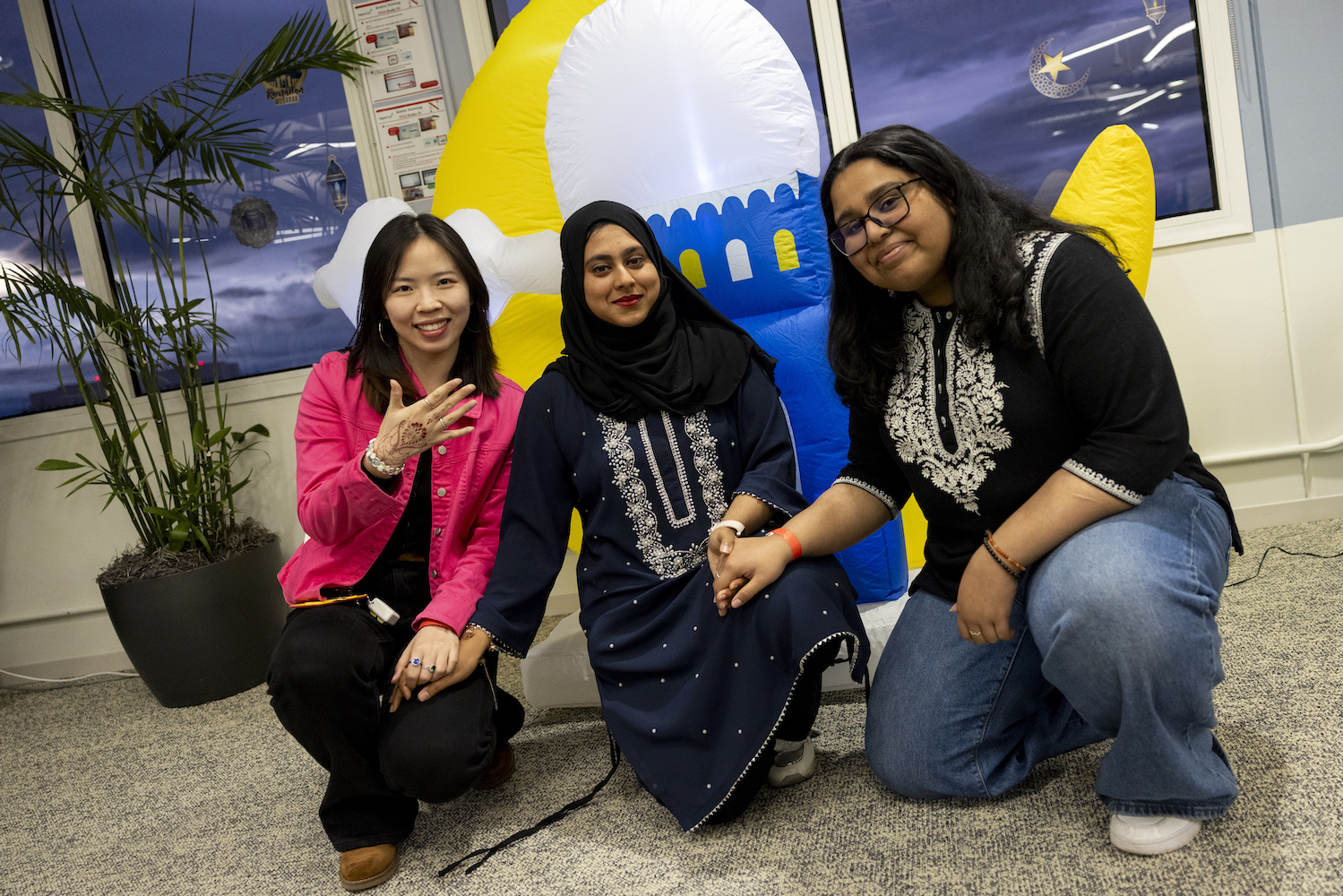
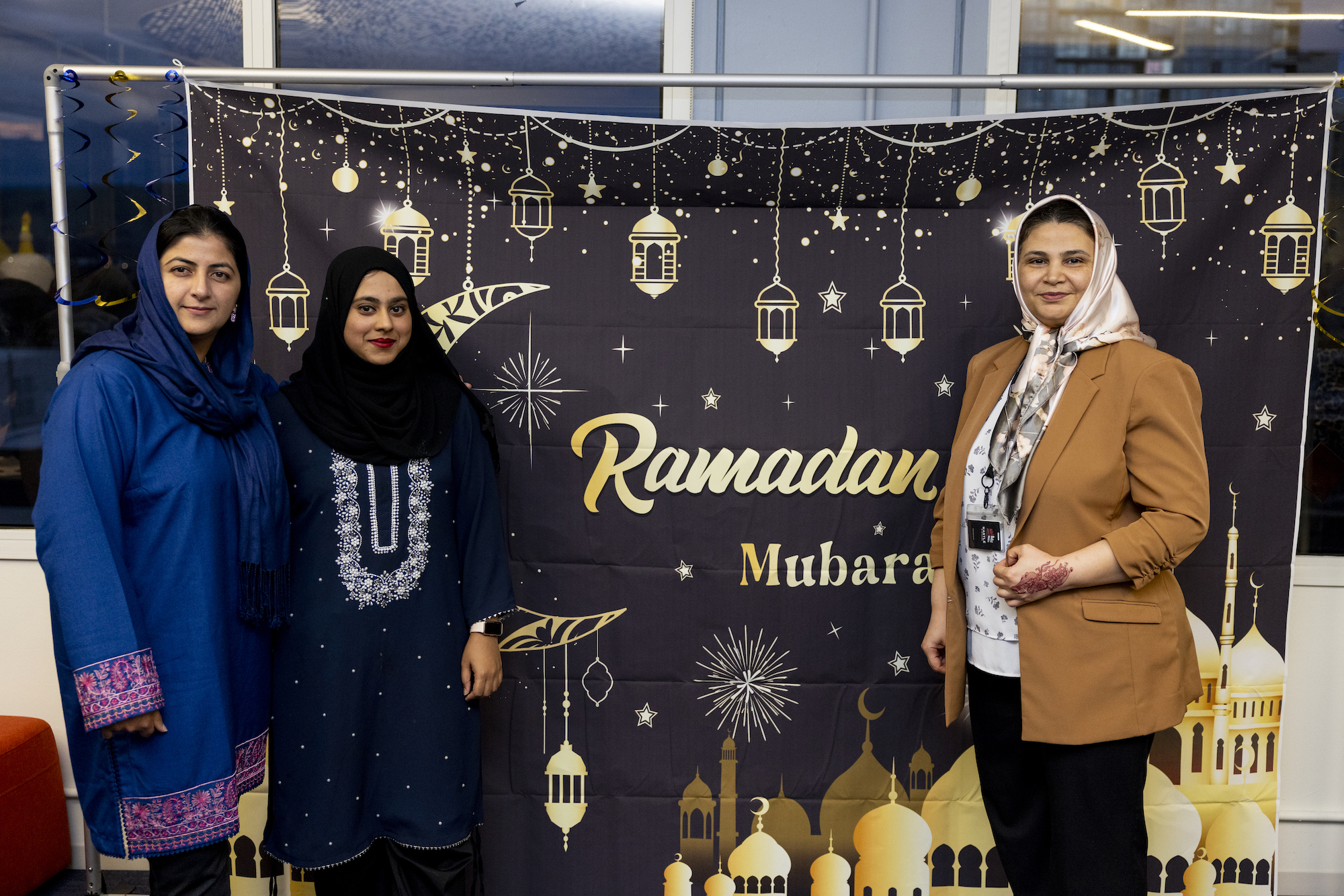
Associate Teaching Professor Tehmina Amjad, student and event emcee Aisha Abdur Rahim, and Assistant Teaching Professor Akram Bayat
With billions of members of the faith in all corners of the world, Islam is the majority religion in over 50 countries spanning a geographic range from West Africa to Southeast Asia. This can lead to small variations in the dates that different regions observe Ramadan, as the start and end are signaled by the visibility of the moon. The official sighting of the crescent moon in 2026 placed the start of the fast across February 18 and 19, depending on the region. Today, March 20, is Eid al-Fitr for many; for others, the holiday may be tomorrow on March 21 if the moon is sighted.
The international Islamic community also brings diversity to religious holidays and observances. The campus Iftar event celebrated this diversity of cultures. Student Ambassador Aisha Abdur Rahim (MS in Computer Science ’26), one of the event organizers and the evening’s emcee, called the room to a flight on “Northeastern Airlines” to learn about Ramadan practices around the world.
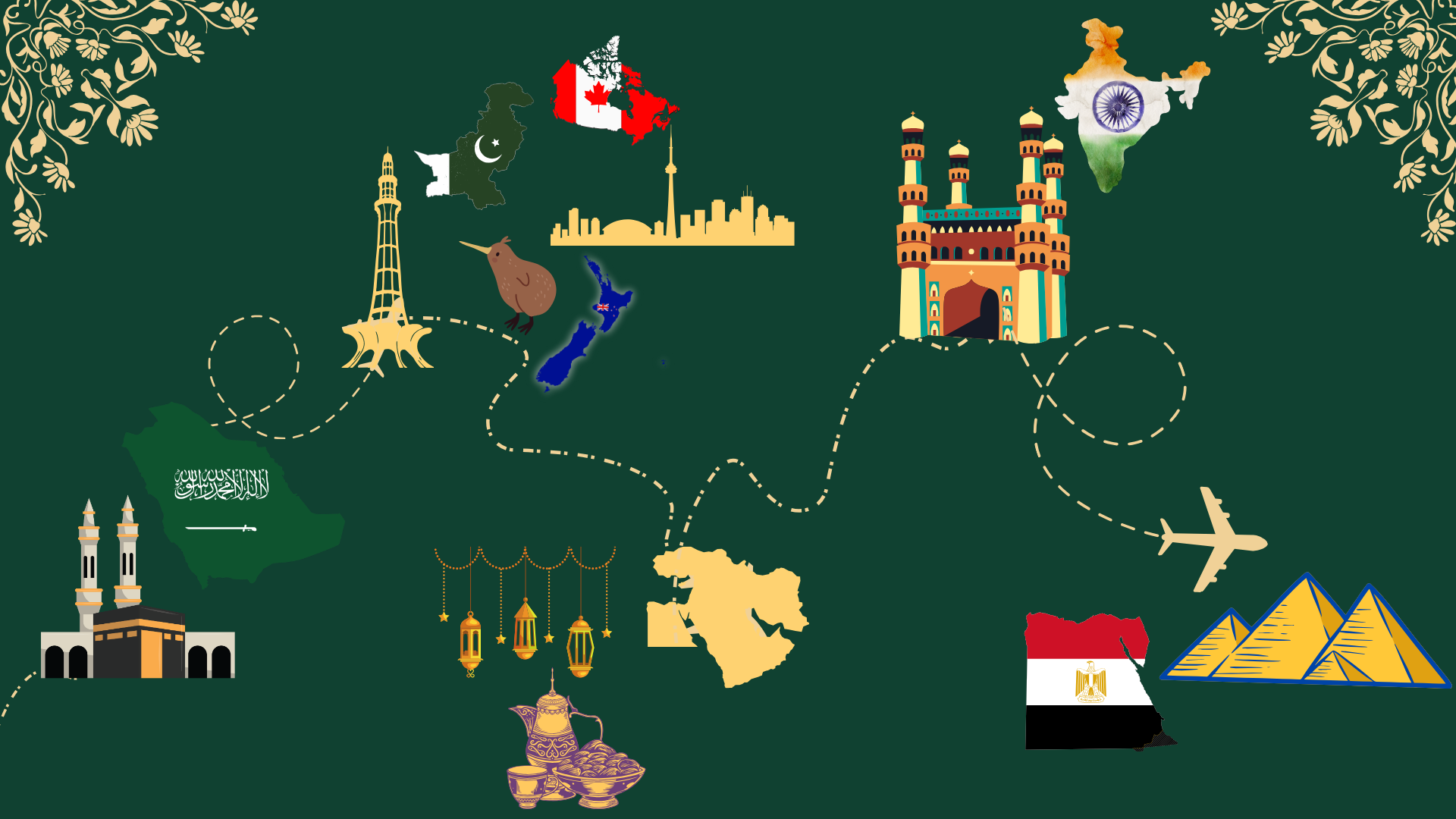
The flight path of Northeastern Airlines
Faisal Riyaz Sarang (MS in Computer Science ’27) noted that the practices of his home country, Saudi Arabia, are widely known throughout the Muslim world. As the country of both Mecca and Medina, it holds a place of prominence in culture for many. His own personal favorite practice is the tradition of making extra food and sharing it with neighbors. It’s a community-building activity that brings people together, even when they might not have occasion to connect otherwise.
Born in New Zealand and raised also in Pakistan and then Canada, Muhammad Bilal (MS in Artificial Intelligence ’27) had an international upbringing. The most significant influence on his practice of Ramadan, however, is living with Type I diabetes. Although his health would exempt him from the expectation of fasting, it has deep meaning for him and he always does as much as he is able. He shared about how he approaches this, working with doctors and setting healthy parameters for himself.
Saahithi Mallarapu (MS in Artificial Intelligence ’27) also had a global childhood across different parts of the Middle East. But the shared experience of Ramadan — looking out for friends, making sure everyone in the community had food, staying out late after sunset — unified her different homes. “We moved from one country to another,” she shared, “but Ramadan felt the same wherever I was.”


When it was his turn to present, Abdullah Basarvi (MS in Computer Science ’27) walked the audience through a day in his home in Hyderabad, India. His mother would typically wake up at 3 a.m. to cook suhoor, the morning meal shared by the family before daybreak. Mornings would be slow and sleepy, followed by afternoons full of prayer. And then iftar. “When you take that first sip of water, it tastes like gratitude in its purest form,” he said. Some of his best childhood memories take place in the long nights of the month, where people in his city stay up almost until dawn shopping and sharing food and chai.
The final presentation came from Yousef Ebrahim (MS in Computer Science ’27), who is from Egypt but spent many Ramadans with his extended family in Saudi Arabia. To him the month is always associated with that experience of community, family, and togetherness. “We as humans are imperfect, problems evolve between us,” he reflected. “Nothing changes until Ramadan comes and two people who haven’t spoken in years are sitting next to each other and talking and laughing. It helps us learn to move on. It’s about being generous by giving care, by giving each other a better place in our hearts.”