From Campus to Career: Alumni Share Hard-Won Wisdom on Making the Leap
December 27, 2025
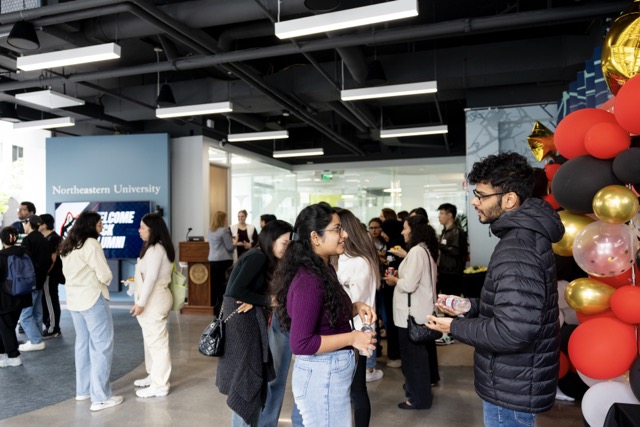
Photos from 2025 alumni events by Ruby Wallau
The transition from student to professional isn’t just about landing that first job: it’s about shifting how you think, work, and connect. At a recent alumni mixer, three Northeastern Silicon Valley graduates opened up about their journeys from classroom to career, sharing insights that challenge common assumptions about what really matters after graduation.
Beyond the Assignment: Learning to Think Long-Term
For Richard Yue, who graduated in May 2025 with a degree in computer science, the biggest adjustment wasn’t mastering new technologies at Meta; it was fundamentally rethinking his approach to work itself. In school, projects had clear endpoints: complete the assignment, submit it, move on. Professional projects are different. “When you’re in the professional world, you have to think that there are people who are going to use this. People are going to see this,” he explains. His code doesn’t disappear after a grade is assigned; it becomes part of systems his colleagues integrate, tools that users depend on. “You actually have to think about your whole team and you also have to think about the effect that you have and how you can best contribute.”
It’s a shift that Matthew Vargas, a 2023 computer science graduate now in product management, experienced firsthand. His days aren’t structured around discrete assignments but around ongoing relationships: checking in with engineers on priority projects, preparing for customer calls, conducting end-of-week retrospectives with his team. “Everything’s just about practice,” he notes, reflecting on how different the rhythm of professional work feels compared to academic deadlines.

The Co-op Advantage
Michael Harding took a different path entirely. After initially pursuing accounting at Northeastern’s business school, he realized during his co-ops that it wasn’t his calling and switched to a dual major in Marketing and International Business. By the time he graduated in 1989, he’d already secured his transition into the professional world. “Going from a co-op to full-time wasn’t very different,” he recalls. He simply stayed on at his last co-op company, eliminating the traditional post-graduation job hunt altogether. The real change? “I was able to buy a new Jeep,” he adds with a grin.
Today, as a product manager at Hewlett Packard Enterprise, Michael’s days are refreshingly varied. “Fortunately, in my role I can switch it up every day: market analysis, alliance meetings, writing product requirements, supervisory involvement,” he explains. Next week, he’ll be working and speaking at a conference – a far cry from the singular focus of student assignments.
Misconceptions and Realities
All three alumni arrived in their industries carrying assumptions that work quickly dismantled. Matthew had thought product management was primarily about working with engineers. The reality proved far more complex. “A lot of the work that comes from being a product manager is your ability to lead a team, to influence them in the right ways and to be able to make sound, rational decisions when things go crazy,” he explains. Within his previous role, he collaborated with designers, customer success teams, and operations – a much broader ecosystem than he’d anticipated.
Michael’s misconception centered on the tech industry itself, particularly the mythology surrounding Silicon Valley innovation. “As far as the tech industry goes, it’s not all new, exciting, change-the-world work,” he says candidly. Working at larger companies often means more traditional manufacturing processes. “Making servers vs. razors vs. dog food… it’s not all that different.” It’s a reality check that grounds expectations without diminishing the meaningful work happening in enterprise tech.
The Advice They’d Give Their Younger Selves
If they could reach back through time, what would they tell themselves as students?
Michael’s advice cuts to something fundamental: confidence in the face of uncertainty. “Don’t be timid just because you don’t know something. So much of business is going to be an ongoing discovery.” It’s wisdom earned across decades in product management, where adaptability often matters more than having immediate answers.
Richard wishes he’d talked more with people already working in software engineering. “That way you’ll really get an idea of what you can expect after you graduate,” he reflects. Matthew echoes this sentiment, adding that he would have pursued a software engineering internship before jumping into full-time work. “I do think that it’s valuable to get those internships or a co-op as a way to understand the process within those companies.”
Resources Worth Using
There’s remarkable consensus on one underutilized campus resource: Career Services. Richard suggests students visit “at least once every couple months” for resume reviews and interview prep. Matthew, who didn’t have access to a fully developed career services system at the time he attended, wishes he had. “Being able to go to somebody for a mock interview, even a non-technical, just behavioral interview; I think that’s really helpful to get practice.”
Networking: Quality Over Quantity
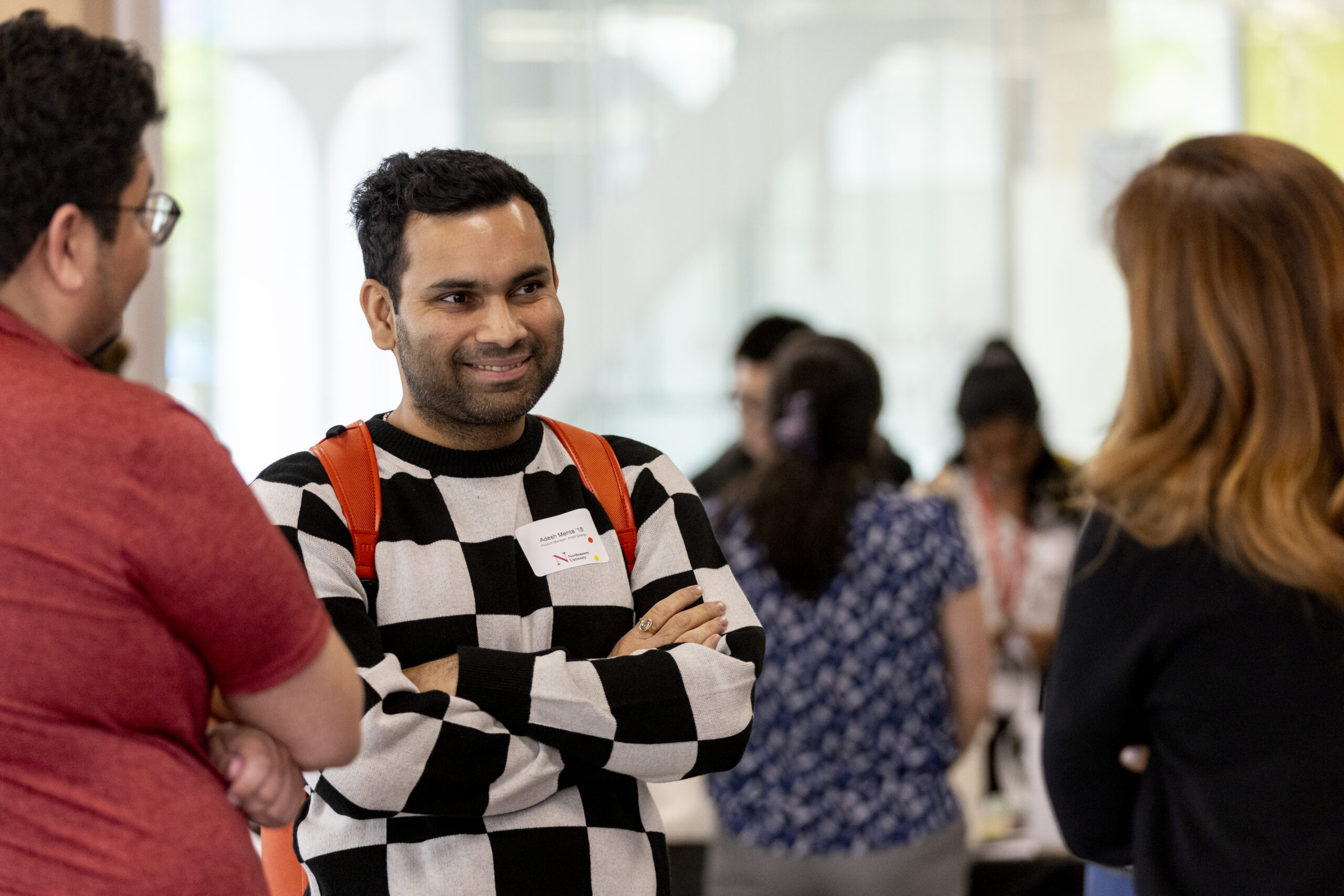
When it comes to building professional connections, all three alumni emphasize authentic relationships over transactional exchanges.
Michael’s approach is refreshingly simple and effective: show up and be present. “Get out to any event that seems in any way relevant. Then plant yourself by the bar or food, make eye contact and say hello. You will always learn something.” It’s advice born from years of conference attendance and alliance meetings, where some of the most valuable connections happen in informal moments.
Richard builds on this, cautioning against superficial networking. Meeting someone and immediately asking for a referral is “much less useful than actually finding people who have shared interest to you.” He suggests connecting over common hobbies like pickleball, cycling, or even shared neighborhoods. “Having a real authentic connection is much more valuable than any online friend you could have.”
Matthew stresses the importance of follow-through after those initial meetings. “Don’t be hesitant to just send a message afterwards and say that it was nice meeting you, would be really interested in sitting down for coffee sometime.” Most of his jobs have come through personal introductions. “If you leave it, you’ll be in that position where you need a job now and wonder who’s the first person I can talk to.”
Looking Forward
What emerges from these conversations spanning graduates from 1989 to 2025 is a consistent picture of professional life that transcends generational divides. Whether navigating Meta’s global engineering teams, guiding product development in fast-paced startups, or managing enterprise technology solutions at HPE, success comes down to embracing ongoing learning, building authentic relationships, and understanding that professional growth is a continuous journey rather than a destination.
As Michael, Matthew, and Richard continue advancing in their respective fields, they’re each living proof that the transition from Northeastern to career success isn’t just possible; it’s already happening, one authentic connection at a time.